More Than Its Parts
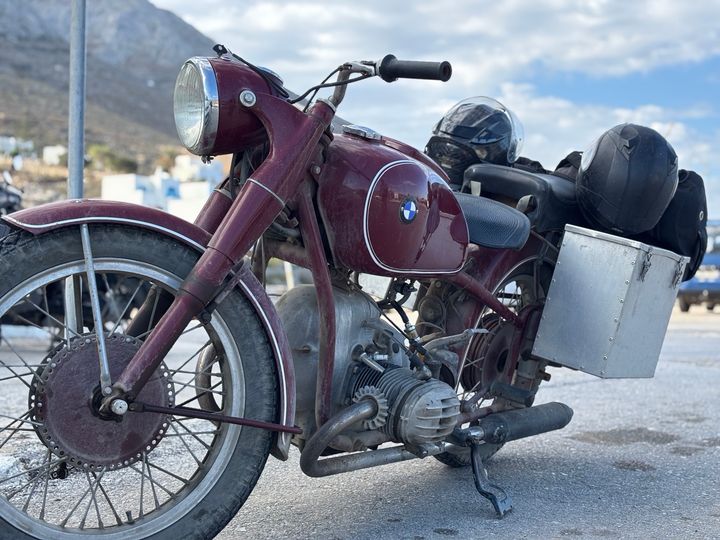
At the ferry port on Amorgos, I noticed a burgundy BMW. It barely had a scratch, though the motorcycle might date to the early 1950s – more than seventy years old.1
A modern replica could copy its design, but not its history. Research suggests that difference may matter to us.2
But how much of that history survives repair after repair? Replace the engine, tank, frame – eventually every part. Is it still the same motorcycle? That’s the Ship of Theseus paradox.3
Perhaps it doesn’t matter how much of that BMW is original. The helmets and luggage suggested an island road trip. I hope they enjoyed the ride.
What are we really choosing when we choose something old?
-
BMW Group Classic lists the R 51/3 (1951–1954) and R 67/2 (1952–1954). These are candidate models, not a confirmed identification or manufacturing date for the photographed BMW.
-
Brandy N. Frazier, Susan A. Gelman, Alice Wilson and Bruce Hood, “Picasso Paintings, Moon Rocks, and Hand-Written Beatles Lyrics: Adults’ Evaluations of Authentic Objects”, Journal of Cognition and Culture 9 (2009), pp. 1–14. In a questionnaire involving 244 UK and US students, objects with genuine historical associations were generally valued more highly than comparable ones without them. The study did not concern motorcycles.
-
Plutarch, Life of Theseus, 23.1, recounts how Athens replaced the ship’s timbers over time, raising a dispute about its identity. Thomas Hobbes later asked what would happen if the discarded timbers were used to build a second ship. The Stanford Encyclopedia of Philosophy, Relative Identity, section 2.5, explains both versions.