Edel & Weiss
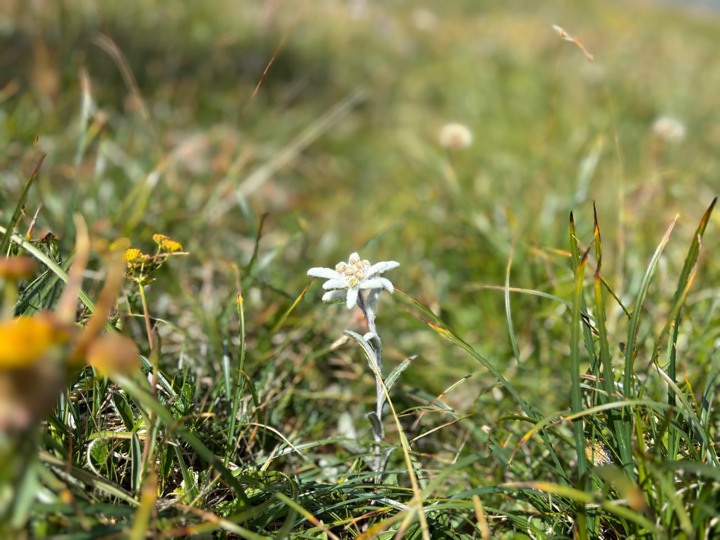
Some things disappear because we do not care. Others because we care too much.
The edelweiss belongs to the second kind. It became a symbol of alpine beauty and courage – and therefore something to pick, carry home and show. The flower was almost loved out of existence.1
When Bergwacht Bayern was founded in 1920, its purpose was not mountain rescue but protecting nature. In 1925, Bavaria placed the edelweiss under complete protection.2 What admiration had not prevented, law tried to stop.
Today, the flower is still specially protected and strongly endangered in Bavaria and fully protected in the canton of Bern.3 I took this photograph in Bern on the ascent to Wildhornhütte.
Most of us no longer need a sign to tell us to leave it where it grows. Not picking it has become part of what one does in the mountains. Or, more precisely, part of what one does not do. A social norm is only powerful while enough people share it.
When does protection become common decency – and when must decency be enforced?
-
The Swiss federal About Switzerland portal traces the flower’s association with Alpine courage and describes how tourist collecting endangered it in “The mystical and mythical edelweiss”.
-
Bergwacht Bayern’s organization history (in German) records nature protection as its 1920 founding purpose. The Bayerische Akademie für Naturschutz und Landschaftspflege documents the 4 July 1925 order and lists edelweiss first among the protected plants in Laufener Spezialbeiträge 1/06, pp. 65–66 (PDF; in German).
-
Bavaria’s plant database (in German) lists edelweiss as specially protected and strongly endangered. Bern’s Nature Conservation Ordinance, annex 1.1 (PDF; in German) lists it among plant species protected without exception throughout the canton.